Continuous, real-time assays that directly quantify FGFR2 catalytic activity — generating a full progress curve in every well for IC₅₀, mechanism, and selectivity studies.
Real-time kinetic or TRF endpoint formats
Optimized substrates and assay-ready kits
Compatible with physiological ATP and cofactors
Designed for: drug discovery, lead optimization, and mechanistic kinase research teams
FGFR2 at a glance. FGFR2 activity is measured continuously and directly with the PhosphoSens® AQT0794 substrate, or as an endpoint TRF readout with AQT0515, with no antibodies or coupling enzymes.
PhosphoSens-Kinetic assays directly quantify enzyme activity by continuously
monitoring substrate phosphorylation or dephosphorylation in real time,
generating a full progress curve in every well.
PhosphoSens-Red assays use europium-based time-resolved fluorescence detection
to enable robust, plate-based quantification of enzyme activity, making them
well suited for high-throughput screening workflows.
Select a kit, substrate, or enzyme above. Our team will confirm pricing, availability, and any applicable bundle discounts.
Active Recombinant Enzymes for FGFR2
Wild-type and mutant forms of FGFR2 for assay development, kinase profiling, and mechanistic studies.
Enzymes are supplied active and optimized for PhosphoSens® substrates.
Purity/activity: For specific information on a given lot, see related technical data sheet.
Storage: Store product at -70°C. For optimal storage, aliquot target into smaller quantities after centrifugation and store at recommended temperature. For most favorable performance, avoid repeated handling and multiple freeze/thaw cycles.
Explore data and documents to support your kinase and phosphatase experiments. Download sample
data, protocols and other resources to see how our assays perform and to help you get started in your own lab.
All validation data generated using PhosphoSens® assays under recommended conditions.
FGFR2 PhosphoSens® Assay Validation Report
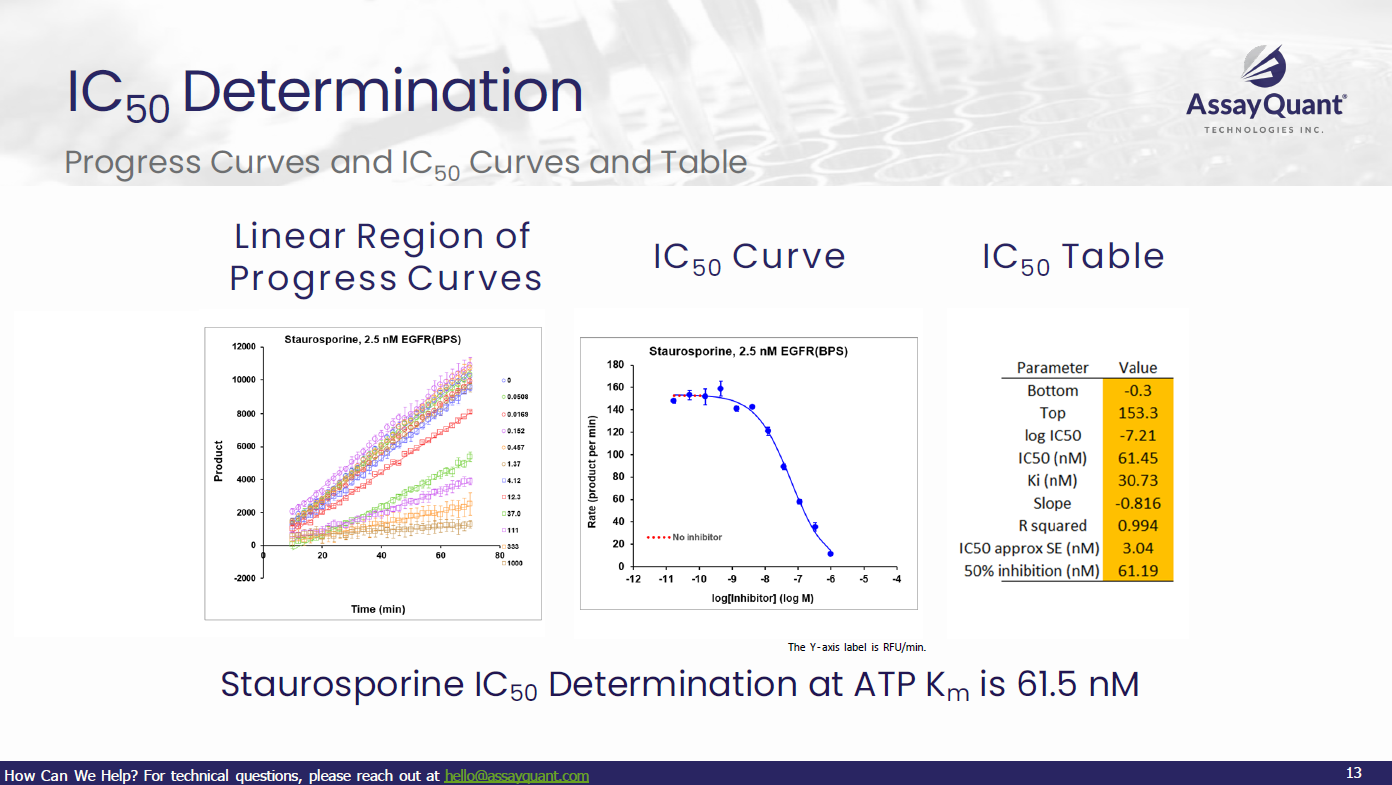
Each validation report provides experimental conditions and data showing:
Enzyme titration and linearity
Sensor peptide substrate titration and Km determination
Discover how continuous assay formats power deep understanding of kinase function. See how
PhosphoSens® assays guide inhibitor profiling, selectivity assessment, and
mechanistic characterization.