Your marketing team, from the ground up
Your pain? We understand. This is why we do what we do, and can provide you with an experience like no other.
Also known as: AKT2 • AKT Serine/Threonine Kinase 2 • PRKBB • PKBBETA • RAC- BETA • PKB beta • RAC-PK-beta
![PhosphoSens AKT2 [E17K] kinase assay kit — continuous real-time fluorescence](https://www.assayquant.com/hs-fs/hubfs/PhosphoSens%20Packaging%20C%20(3).jpg?width=450&name=PhosphoSens%20Packaging%20C%20(3).jpg)
AKT2 (AKT Serine/Threonine Kinase 2) belongs to the AGC kinase superfamily and is one of three closely related AKT isoforms (AKT1, AKT2, AKT3). AKT2 is activated downstream of phosphoinositide 3-kinase (PI3K) through sequential phosphorylation at Thr309 by PDK1 and Ser474 by mTORC2, driving full catalytic activation. It preferentially phosphorylates substrates bearing the RxRxxS/T consensus motif, including GSK3β, FOXO1, AS160 (TBC1D4), and IRS1, coordinating insulin-mediated glucose uptake, glycogen synthesis, and GLUT4 translocation. AKT2 plays a dominant role in metabolic tissues — liver, skeletal muscle, and adipose — distinguishing it from the more proliferative roles of AKT1. Dysregulation through PIK3CA mutation, PTEN loss, or AKT2 amplification drives type 2 diabetes, insulin resistance, and cancers including breast, ovarian, pancreatic, and colorectal malignancies. Its central position in PI3K/AKT/mTOR signaling and metabolic control makes AKT2 a compelling and therapeutically validated drug target for both oncology and metabolic disease programs.
AKT2 drug discovery presents several assay challenges: the enzyme requires careful lipid cofactor considerations reflecting its PIP3-dependent activation, and its high homology with AKT1 and AKT3 demands isoform-selective profiling. Traditional endpoint assays like ADP-Glo and HTRF capture only a single time point, missing burst kinetics, substrate depletion artifacts, and non-linear progress curve behavior that can obscure true inhibitor mechanism. Radiometric assays introduce safety and throughput burdens. PhosphoSens continuous fluorescent kinase assays use CSox-based peptide substrates to monitor AKT2 substrate phosphorylation in real time at physiological ATP concentrations, generating complete progress curves that reveal mechanism of inhibition, enable accurate Ki determination, and faithfully capture covalent inhibitor kinact/KI parameters — critical for next-generation AKT2 covalent allosteric inhibitors. The homogeneous, no-wash format accelerates SAR campaigns and reduces false positives common in endpoint formats.
Have questions about AKT2 [E17K] assay design, selectivity panels, or covalent inhibitor characterization?
Ask Our Scientists →Continuous, real-time fluorescent assays optimized for quantitative AKT2 [E17K] activity measurements, IC50 determination, and mechanistic studies.
PhosphoSens-Kinetic assays directly quantify enzyme activity by continuously monitoring substrate phosphorylation or dephosphorylation in real time, generating a full progress curve in every well.
Learn more about PhosphoSens-Kinetic →Need pricing or availability? Select a kit or substrate to request a quote below.
Kits
Ready-to-use assay kits containing substrate and all essential reagents.
Automatically save 10% when bundling 10ug recombinant enzyme with your 1,000 assay kit. View enzymes
Substrate
Bulk PhosphoSens® substrate for assay development and high-throughput workflows.
Automatically save 10% when bundling Reagent Packs with your substrate. View Reagent Packs
Select a kit, substrate, or enzyme above. Our team will confirm pricing, availability, and any applicable bundle discounts.
No PhosphoSens-Red format is currently available for AKT2 [E17K].
Select a kit, substrate, or enzyme above. Our team will confirm pricing, availability, and any applicable bundle discounts.
No recombinant enzymes are currently available for AKT2 [E17K].
Explore data and documents to support your kinase and phosphatase experiments. Download sample data, protocols and other resources to see how our assays perform and to help you get started in your own lab. All validation data generated using PhosphoSens® assays under recommended conditions.
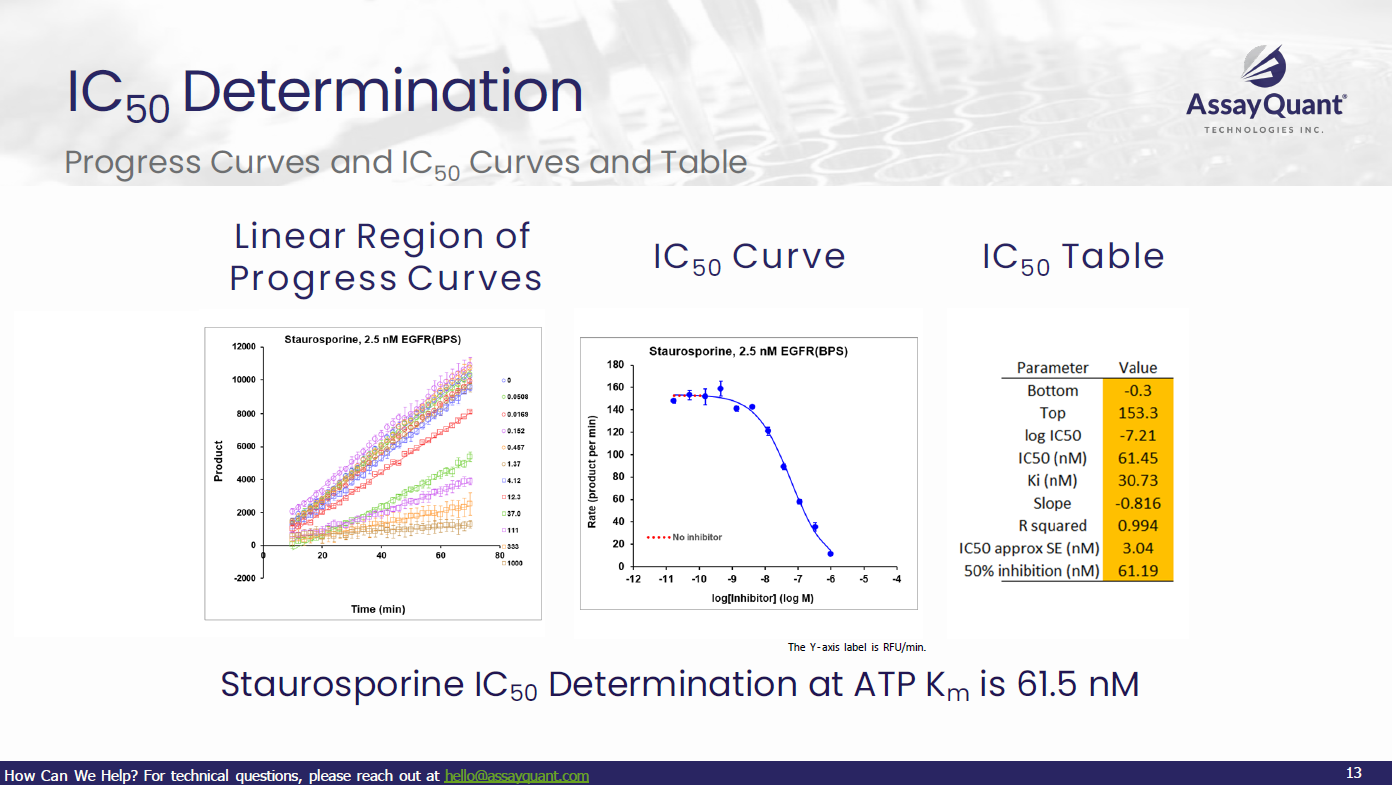
Each validation report provides experimental conditions and data showing:
Protocol
See how the PhosphoSens-Kinetic Assay can be used to find the IC50 of a kinase inhibitor.
Download Protocol →Webinar
Discover how continuous assay formats power deep understanding of kinase function. See how PhosphoSens® assays guide inhibitor profiling, selectivity assessment, and mechanistic characterization.
Watch the Webinar →Service
Need broader selectivity data? KinSight profiling runs your compounds across our full kinase panel under identical PhosphoSens conditions.
Learn about KinSight →Want to hear the latest about our technology? Be among the first to learn about our latest products and services.