Your marketing team, from the ground up
Your pain? We understand. This is why we do what we do, and can provide you with an experience like no other.
Also known as: ABL • ABL1 • JTK7 • c-ABL • v-abl • p150 • BCR-ABL • Abelson murine leukemia viral oncogene 1 • V-abl Abelson murine leukemia viral oncogene 1
![PhosphoSens ABL1 [Y245F/Y412F] kinase assay kit — continuous real-time fluorescence](https://www.assayquant.com/hs-fs/hubfs/PhosphoSens%20Packaging%20C%20(3).jpg?width=450&name=PhosphoSens%20Packaging%20C%20(3).jpg)
ABL1 (ABL proto-oncogene 1) is a non-receptor tyrosine kinase belonging to the Abl family, which includes ABL1 and ABL2 (ARG). Under normal physiological conditions, ABL1 activity is tightly regulated through intramolecular autoinhibition, with the SH3 and SH2 domains clamping the kinase domain in an inactive conformation. Activation occurs via displacement of this autoinhibitory clamp by upstream signals, scaffolding proteins, or oncogenic rearrangements. Key substrates include CRKL, STAT5, FAK, and the adaptor protein DOK1, linking ABL1 to cell proliferation, survival, cytoskeletal remodeling, and DNA damage response. In chronic myelogenous leukemia (CML) and a subset of acute lymphoblastic leukemias (ALL), the chromosomal translocation t(9;22) generates the BCR-ABL1 fusion oncoprotein, constitutively activating kinase activity and driving uncontrolled myeloid expansion. This makes ABL1 one of the most validated oncology drug targets in history, and the success of imatinib as a molecularly targeted therapy established the proof-of-concept for kinase inhibitor drug discovery across oncology.
Profiling ABL1 inhibitors presents several assay challenges: the kinase is frequently studied at physiological ATP concentrations to accurately capture competitive inhibitor potency, and the BCR-ABL1 fusion introduces complex regulatory dynamics that can confound endpoint measurements. Traditional ADP-Glo and HTRF assays require incubation stop points that miss transient kinetic phenomena such as slow-on/slow-off binding, covalent inactivation (kinact/KI), and induced-fit mechanisms critical for third-generation inhibitors like ponatinib and asciminib. Radiometric formats add safety and throughput limitations. AssayQuant's PhosphoSens continuous fluorescent assay monitors substrate phosphorylation in real time using physiological ATP, generating full progress curves that capture time-dependent inhibition, covalent kinact/KI parameters, and inhibitor mechanism of action without the endpoint artifacts that can misclassify allosteric STAMP inhibitors like asciminib.
Have questions about ABL1 [Y245F/Y412F] assay design, selectivity panels, or covalent inhibitor characterization?
Ask Our Scientists →Continuous, real-time fluorescent assays optimized for quantitative ABL1 [Y245F/Y412F] activity measurements, IC50 determination, and mechanistic studies.
PhosphoSens-Kinetic assays directly quantify enzyme activity by continuously monitoring substrate phosphorylation or dephosphorylation in real time, generating a full progress curve in every well.
Learn more about PhosphoSens-Kinetic →Need pricing or availability? Select a kit or substrate to request a quote below.
Kits
Ready-to-use assay kits containing substrate and all essential reagents.
Automatically save 10% when bundling 10ug recombinant enzyme with your 1,000 assay kit. View enzymes
Substrate
Bulk PhosphoSens® substrate for assay development and high-throughput workflows.
Automatically save 10% when bundling Reagent Packs with your substrate. View Reagent Packs
Select a kit, substrate, or enzyme above. Our team will confirm pricing, availability, and any applicable bundle discounts.
No PhosphoSens-Red format is currently available for ABL1 [Y245F/Y412F].
Select a kit, substrate, or enzyme above. Our team will confirm pricing, availability, and any applicable bundle discounts.
No recombinant enzymes are currently available for ABL1 [Y245F/Y412F].
Explore data and documents to support your kinase and phosphatase experiments. Download sample data, protocols and other resources to see how our assays perform and to help you get started in your own lab. All validation data generated using PhosphoSens® assays under recommended conditions.
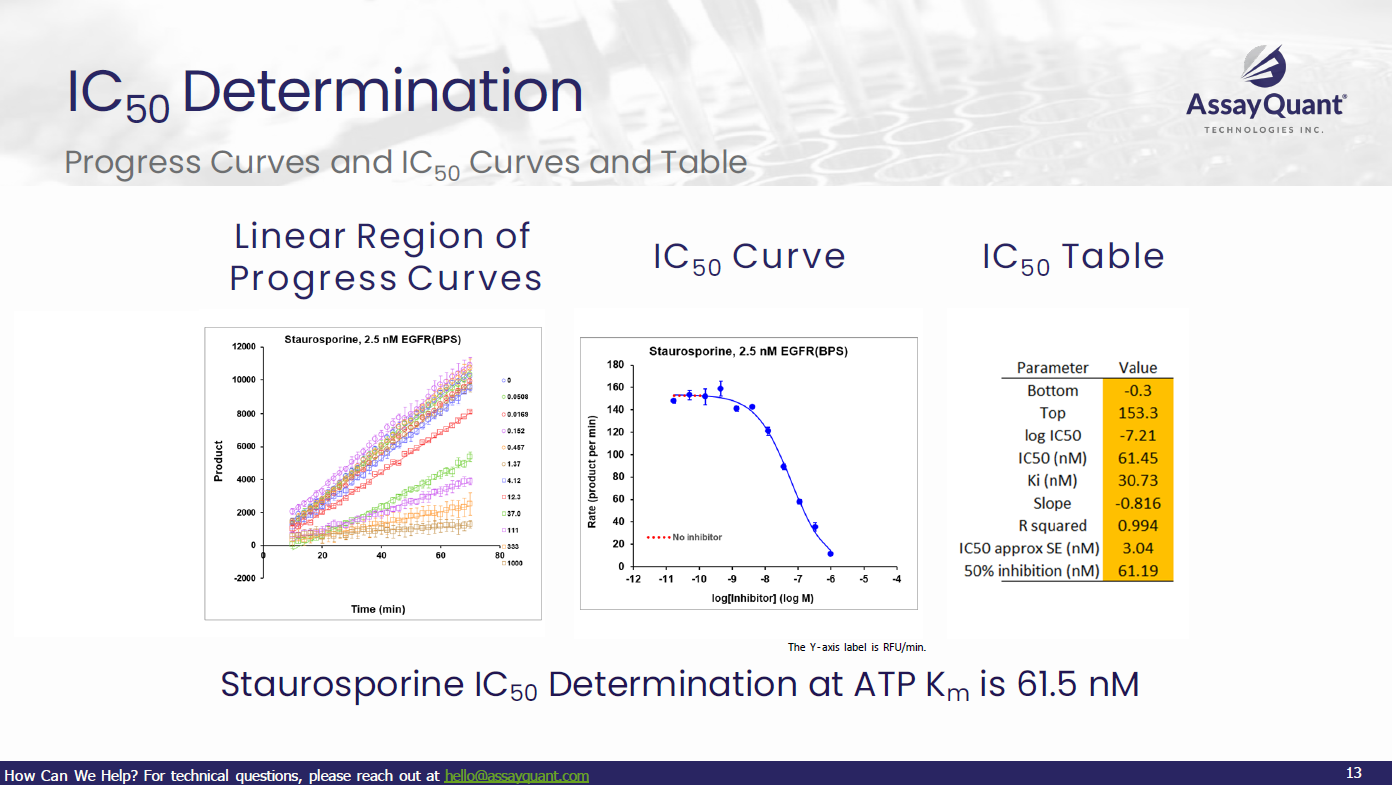
Each validation report provides experimental conditions and data showing:
Protocol
See how the PhosphoSens-Kinetic Assay can be used to find the IC50 of a kinase inhibitor.
Download Protocol →Webinar
Discover how continuous assay formats power deep understanding of kinase function. See how PhosphoSens® assays guide inhibitor profiling, selectivity assessment, and mechanistic characterization.
Watch the Webinar →Service
Need broader selectivity data? KinSight profiling runs your compounds across our full kinase panel under identical PhosphoSens conditions.
Learn about KinSight →Want to hear the latest about our technology? Be among the first to learn about our latest products and services.